Palazzo Liviano
21 September 2026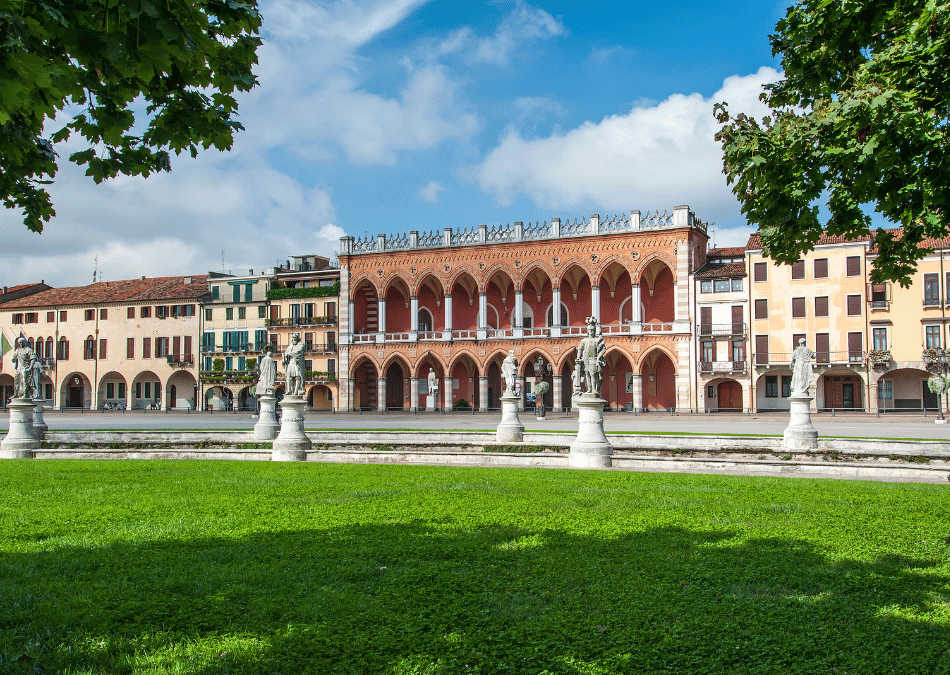
Cosa vedere a Padova in un giorno
Padua is a city of water and stone, whose identity and prosperity have been shaped for centuries by a millenary history.World-famous for Giotto’s artistic masterpieces and deep devotion to Saint Anthony, it is also a vibrant and dynamic university town, characterized by majestic noble palaces, picturesque squares animated by centuries-old markets, and charming canals that tell its ancient soul.
For guests at Casa al Carmine, starting your day couldn’t be more convenient: all main attractions can be reached on foot directly from our property in Via Vendramini, gradually making your way through the city center from north to south.
An Important Note: Real Visit Durations for Museums and the Botanical Garden
If you wish to include in-depth visits to the city’s major historical complexes in your day, it is essential to account for the actual time required so you don’t find yourself rushing.
The museum complex comprising the Scrovegni Chapel, the Eremitani Civic Museums, and Palazzo Zuckermann is by far the most time-consuming stop on the entire itinerary: allow a minimum of 3.5 to 4 hours in total to visit the whole complex at a comfortable pace. If you only have a single day, you must choose whether to dedicate half a day to this exhibition route or prefer exploring the city outdoors, focusing on the squares, basilicas, and historic quarters. Please also remember that entry to the Scrovegni Chapel must strictly be booked HERE well in advance.
A similar rule applies to the Botanical Garden: exploring both the 16th-century Ancient Garden and the massive greenhouses of the Biodiversity Garden requires at least 90 minutes, which easily becomes two hours for a relaxed stroll.
By opting out of lengthy museum visits, the walking itinerary outlined below allows you to enjoy all of Padua in total relaxation.
1. The Church of the Carmine
The itinerary begins just steps away from Casa al Carmine at the Basilica of Santa Maria del Carmine in Piazza Petrarca. This place of worship, tied to the Carmelite Order since the 14th century, welcomes visitors with its imposing Renaissance structure.
The church is celebrated for the splendid Scuola del Carmine and its Chapel, fully frescoed with 16th-century pictorial cycles dedicated to the life of the Virgin Mary, created by masters such as Girolamo del Santo and Tiziano Minio. It is a precious artistic treasure often off the beaten tourist track, perfect for beginning to savor the city’s sacred history.
2. Caffè Pedrocchi: The “Café Without Doors”

Walking toward the historic center, you will encounter one of the most famous monumental cafés in Europe: Caffè Pedrocchi. Designed in the 19th century by the renowned architect Giuseppe Jappelli in a fascinating blend of Neoclassical and eclectic styles, it was historically known as the “café without doors” because until 1916 it remained open day and night, welcoming intellectuals, professors, students, and Risorgimento patriots.
Stopping here for a break is an indispensable ritual for anyone visiting the city. You can wander through its historic rooms (the White Room, the Red Room, and the Green Room, which even today remains open to everyone without any obligation to order) and look in the White Room for the bullet hole fired by Austrian troops during the 1848 student riots.
At the counter or at a table, ordering the famous Caffè Pedrocchi is a must: a special espresso served in a large cup topped with a cold mint-emulsified cream and a dusting of cocoa, strictly drunk without stirring and without adding sugar to appreciate the contrast between hot and cold.
3. The Three Squares and Palazzo della Ragione
Just a few steps from Pedrocchi, you immerse yourself in the medieval square system, the commercial heart of the city since the Middle Ages:
-
Piazza della Frutta: Home to the city market for over eight hundred years. Here, the historic Bar Dei Osei is worth a stop to sip a coffee or an aperitif surrounded by marble stalls and historic palaces.
-
Piazza delle Erbe: The scene of the daily fruit and vegetable market. For a quick bite, the essential stop is Bar Nazionale, famous throughout the city for its hot tramezzini.
-
The Ritual of the Folpetto: It is impossible to pass between Piazza delle Erbe and Piazza della Frutta without noticing the historic kiosk “La Folperia”. Local tradition dictates stopping here to taste the famous folpetti, small octopuses boiled on the spot at the counter, sliced, and served warm with a squeeze of lemon, parsley, and green sauce, accompanied by an inevitable “ombra” (a small glass) of white wine.
-
Palazzo della Ragione (Il Salone) and the Sotto Salone: The majestic medieval palace that divides and dominates the squares. On the upper floor, you can admire the gigantic raised Great Hall frescoed with astrological and astronomical themes and the large 15th-century wooden horse. On the ground floor, the atmosphere of the Sotto Salone awaits you: stroll through medieval arcades packed with historic food shops to buy delicacies or stop at a counter for a glass of wine accompanied by various local spunciotti (Venetian tapas).
-
The Torre degli Anziani (Open to Visitors): Directly adjacent to Palazzo della Ragione rises the Torre degli Anziani (also known as the White Tower), the tallest medieval building in the city. Today, the tower is finally open and accessible to the public: climbing its steps to the panoramic terrace rewards you with a breathtaking 360-degree view over the rooftops of the historic center, the squares, and the Euganean Hills in the background.
4. The Duomo, the Baptistery, and Pasticceria Duomo
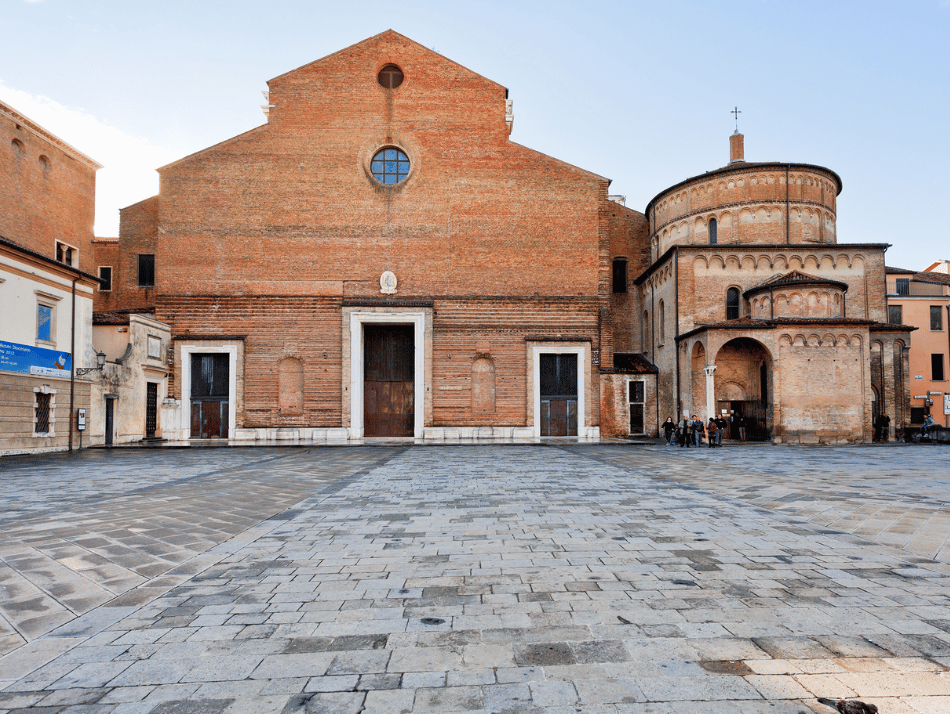
From the squares, head toward Piazza Duomo, where the Cathedral of Santa Maria Assunta (the Duomo of Padua) stands, its raw brick facade concealing a project to which Michelangelo Buonarroti contributed.
Beside the Duomo stands the Baptistery of San Giovanni Battista, which houses inside its walls a spectacular 14th-century fresco cycle painted by Giusto de Menabuoi that covers the entire interior wall surface of the building: a total of about a hundred scenes featuring stories from Genesis, the Apocalypse, and Saint John the Baptist. The focal point of the decoration is the dome depicting Paradise, where, surrounding Christ Pantocrator, ranks of saints and angels rotate with the Virgin Mary serving as the mediator between her Son and humanity.
For a 100% authentic Paduan experience, stop immediately next door at the historic Pasticceria Duomo, a true daily staple for locals at breakfast or snack time: here, you must order a cappuccino accompanied by their famous ferro di cavallo, a delicious low-leavened butter brioche filled with jam.
5. The Jewish Ghetto and the Bo University
Leaving the Duomo, turn back through the charming alleyways of the Jewish Ghetto (established in 1603), characterized by narrow cobblestone streets, tall vertically developed buildings, small synagogues, and atmospheric venues.
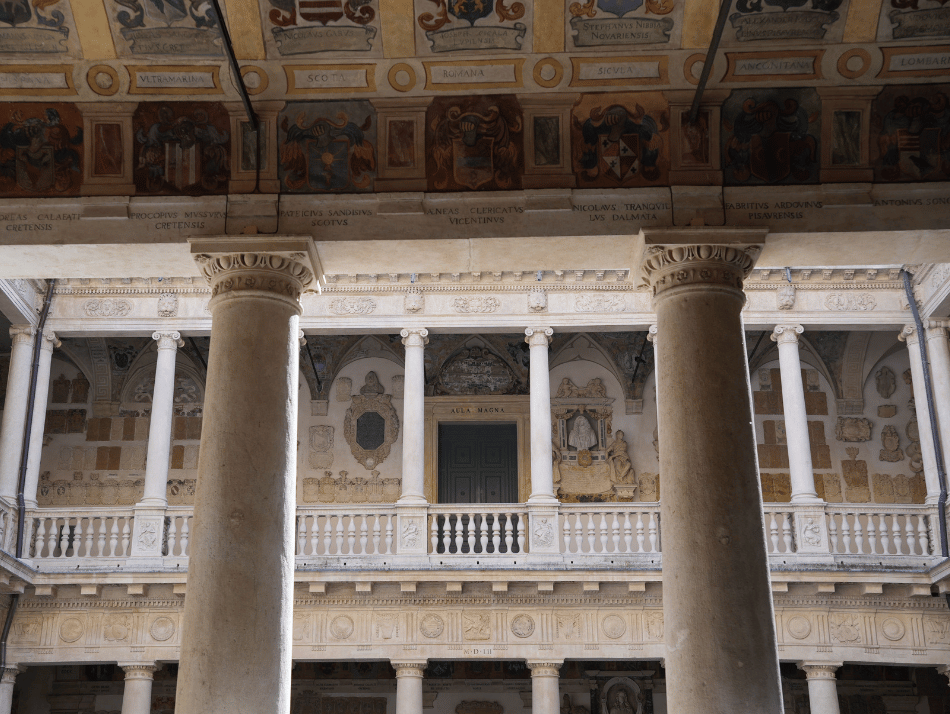
Emerging from the Ghetto brings you directly to Palazzo del Bo, the historic seat of the University of Padua (founded in 1222). Stepping inside allows you to breathe in centuries of academic history. Inside, two monumental spaces overlap: the 16th-century Ancient Courtyard, frescoed with student heraldic coats of arms, and the New Courtyard, designed in the 20th century by architect Ettore Fagiuoli. Here you can admire the monumental high-relief by Attilio Selva featuring the words of Filippo Tommaso Marinetti, the stele by Giò Pomodoro, and the installation Resistenza e Liberazione by Jannis Kounellis.
Under the artistic direction of Gio Ponti, you will find the Scala del Sapere (frescoed by Gio Ponti himself) and the marble statue of Palinuro by Arturo Martini. During your stop, it is well worth visiting the historic Bar da Mario to try the “Polifonico”, a signature drink symbol of Paduan student spirit, as well as the Goliardia Museum, a small gem packed with historical artifacts that tell the story of a unique local tradition.
6. Piazza Antenore, Via del Santo, and the Basilica of Saint Anthony (“Il Santo”)
Leaving Palazzo del Bo, the walk continues toward Piazza Antenore. This square is steeped in charm and myth: at its center stands the medieval ark guarding the presumed Tomb of Antenor, the Trojan prince who, according to the legend narrated by Virgil, founded the city of Padua in 1183 BC, making it one of the oldest in Italy.
From Piazza Antenore, turn directly onto historic Via del Santo, one of the most characteristic and lively streets in the center. The street takes its name because it leads straight to the Basilica of Saint Anthony. Along this bustling road, you will find the Political Science Faculty of the University of Padua and various eateries. Among these stands out the historic Enoteca Severino – active since 1901 – a local institution perfect for a traditional break to enjoy a good glass of wine.
Via del Santo is also the ideal place to discover Padua’s great pastry tradition. Here, you must try two unique local sweet specialties: the famous Dolce del Santo (a soft, rich leavened cake born from monastic traditions, filled with puff pastry,marzipan, apricot jam, and raisins) and the Pazientina, considered Padua’s historic cake par excellence, featuring a rich layer of shortcrust, sponge cake, zabaglione cream, and chocolate shavings.
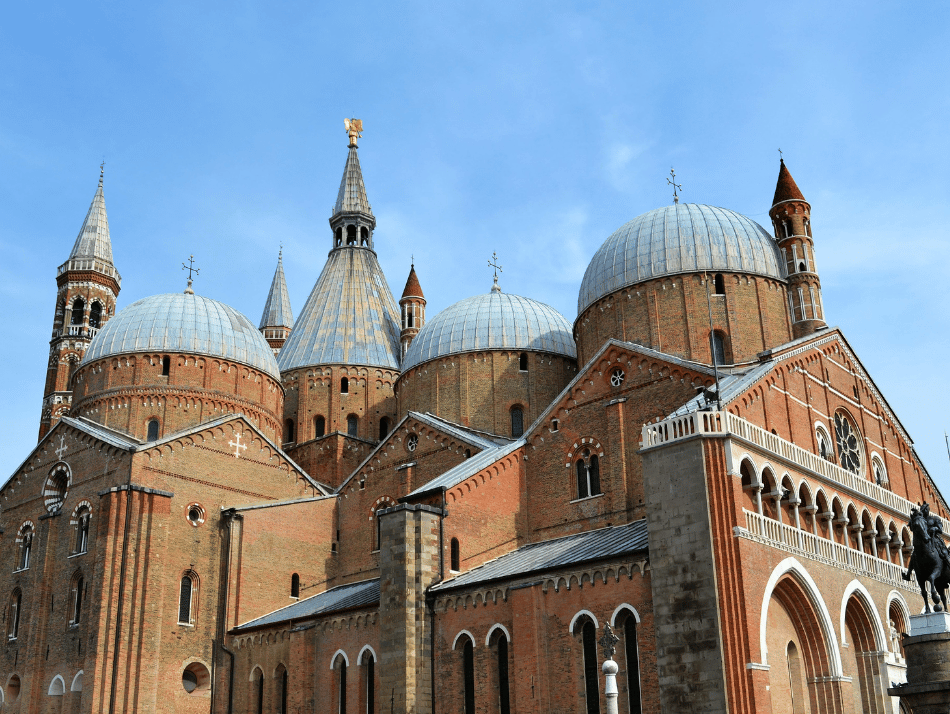
Walking the street to the end brings you face to face with the majestic Basilica of Saint Anthony, simply called “Il Santo” by locals. Built starting in 1232, the basilica is an extraordinary masterpiece blending a Romanesque gabled facade, Gothic arches, great Byzantine domes, and Moorish minaret-like bell towers. Inside, you can visit the solemn Chapel of the Ark containing the Saint’s tomb, the baroque Chapel of the Relics (housing the uncorrupted tongue of Saint Anthony), and the High Altar adorned with Donatello’s famous Renaissance bronzes. Outside, its four monumental cloisters offer a haven of immense peace.
7. Prato della Valle, the Botanical Garden, Santa Giustina, and the Precinema Museum
Leaving the Santo, a few steps along Via Belludi bring you into the enchanting Prato della Valle, one of the largest and most captivating elliptical squares in Europe. At its center lies the green Memmia Island, surrounded by a double ring of 78 statues depicting the most illustrious figures in Paduan and Venetian history, encircled in turn by the Retta della Bonifica canal (fed by the waters of the Bacchiglione River).
Around the square, three sites of immense value are concentrated:
-
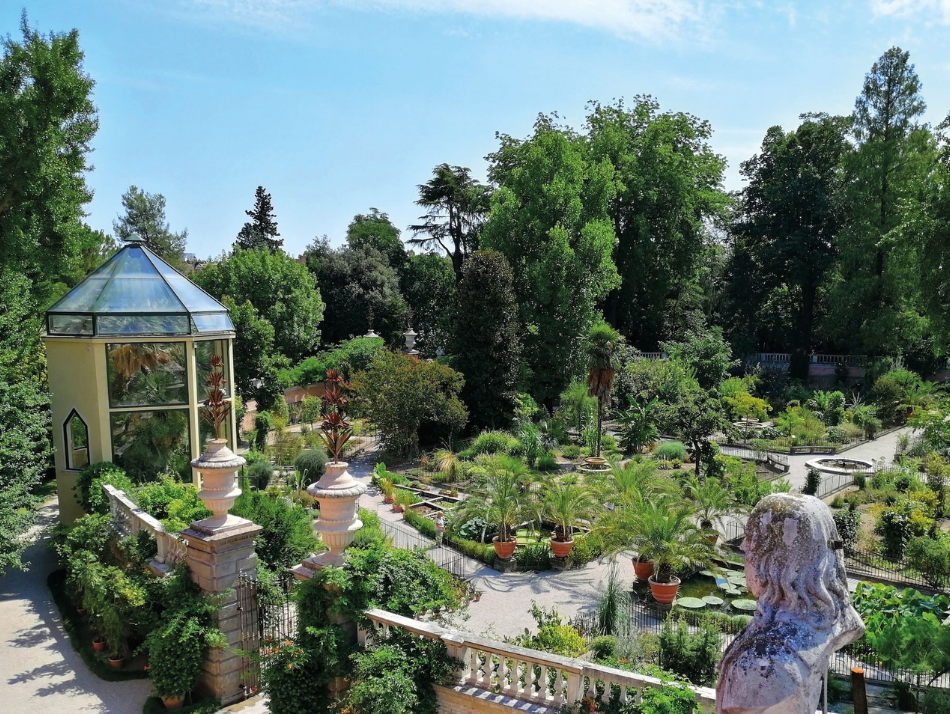
The Botanical Garden (UNESCO World Heritage Site): Founded in 1545 as the “Garden of Simples” for studying medicinal plants, it is the oldest university botanical garden in the world still in its original location. Keep in mind that visiting the Ancient Garden with Goethe’s Palm (planted in 1585) and the modern Biodiversity Gardenrequires at least 90 minutes (up to 2 hours).
-
The Basilica of Santa Giustina: An imposing building dominating one side of Prato della Valle, which visitors very often mistake for the Basilica of the Santo due to its gigantic domes and monumental scale. Dedicated to one of the city’s first martyrs and patron saints, it is a church of huge historical and civic importance: this is where solemn state funerals for the Veneto Region are held. Inside are preserved the remains of Saint Justina, the precious relics of Saint Luke the Evangelist and the first bishop Saint Prosdocimus, as well as an ancient,evocative medieval crypt.
-
The Precinema Museum: Located on the noble floor of the 18th-century Palazzo Angeli, overlooking Prato della Valle, this is a true hidden gem of Padua that very few tourists know about. It houses the extraordinary Minici Zotti Collection, a delightful journey featuring magic lanterns, hand-painted glass slides, optical machines, and vintage instruments that anticipated the birth of modern cinema with truly extraordinary collections of objects.
8. The Specola

From the open spaces of Prato della Valle, a walk of about 15 minutes takes you toward the Specola, Padua’s ancient astronomical tower created from the main tower of the medieval castle of the Carraresi lords, situated at one of the most romantic and scenic spots in the city.
-
Note for your visit: Keep in mind that the interior of the Specola tower is only open to visitors on Saturdays and Sundays. If you arrive during weekdays you will only be able to admire it from the outside, but the visual spectacle of the tower reflecting on the waters of the Bacchiglione River is well worth the trip alone!
Once you arrive at the Specola, perhaps tired from the long walk, you can treat yourself to a well-earned aperitif at the Specola bar, a favorite spot among local youth. To conclude your evening, we recommend two wonderful alternatives:
-
Option 1 (Fast return by bus): Walk one minute to nearby Via Pasquale Paoli. At the Paoli 14 stop, catch Bus Line 5 or Line 12 and get off at Giardini dell’Arena, from where you can walk back to Casa al Carmine in just a few minutes.
-
Option 2 (Evening walk along the Riviere): If you still feel like walking and want to treat yourself to an unforgettable, non-touristy view, you can walk along all the historic Paduan riverbanks: Riviera Paleocapa, Riviera San Benedetto, and Riviera Mussato. This walk skirts the Bacchiglione River and offers a gorgeous view.Following the river all the way to the end brings you to Via San Pietro, where you’ll be just steps away from excellent dining spots highlighted in our food guide, such as Isoletta, Osteria San Leonardo, or Pizzeria Savonarola, for dinner before returning to Casa al Carmine in just a short stroll.
Useful Dining Tips
To enjoy every moment of the day to the fullest, from early morning until late at night, we have compiled detailed guides for our guests featuring the best addresses in town:
-
To start the day or for a sweet break: Check out our Guide to Breakfast and Brunch in Padua to discover the best historic cafes and bakeries for artisan croissants and specialty coffee.
-
For the Spritz and Aperitivo ritual: Find all the historic market stalls and local hot spots in our Guide to Aperitivo in Padua. For a quick lunch in the center, we also remind you of the street food options in the Sotto Salone or an informal meal at Kempes in Piazza della Frutta (reservations recommended).
-
For traditional lunch and dinner: To discover the best taverns, trattorias, and local spots to taste traditional Paduan dishes, consult our Guide to Restaurants in Padua.
-
For evening pizza: If you fancy a fragrant, quality pizza upon returning from your tour, read our selection of the Best Pizzerias in Padua.
Staying at Casa al Carmine for Your Tour of Padua
To experience the city in complete relaxation without the stress of commuting, Casa al Carmine offers the ideal logistical base. Located at Via Vendramini 1, within the walls of Padua’s historic center, the property is just 700 meters from the Central Station.
This location allows guests to explore all sights comfortably on foot, reach the station in less than 10 minutes for regional train connections, or easily catch a taxi right from Via Vendramini.
For guests traveling by car, Casa al Carmine provides 9 private parking spaces upon reservation, located in an area accessible without passing through ZTL (Limited Traffic Zone) cameras, eliminating any access permit hassles. With its 26 spacious rooms and a 300 sqm sun terrace, the property ensures maximum comfort for your stay in Padua.