Padova Jazz Festival 2026
15 September 2026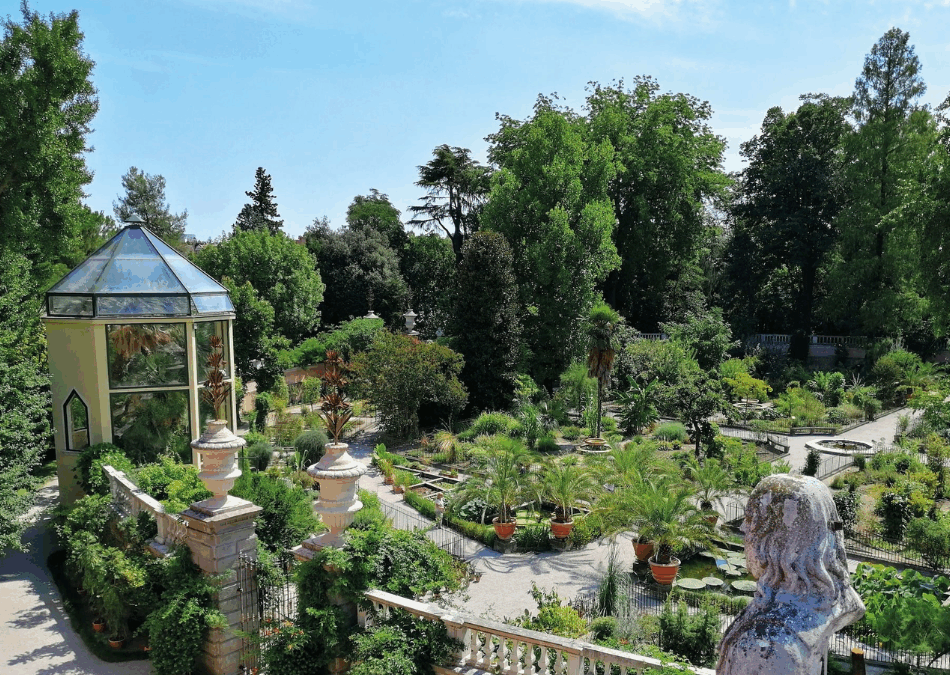
Nestled in the historic heart of Padua, between the solemnity of the Basilica of St. Anthony and the monumental expanse of Prato della Valle, lies a place that is simultaneously an oasis of peace and a living monument to the history of science. Founded in 1545, the Botanical Garden of Padua is the oldest university botanical garden in the world to have preserved its original location and layout. Since 1997, it has been inscribed on the UNESCO World Heritage list, a recognition that celebrates its fundamental role in the development of medicine, botany, and global biodiversity conservation.
The Foundation and the Garden of Simples: Between Medical Need and Scientific Revolution
It was June 29, 1545, when the Senate of the Venetian Republic decreed the establishment of “a suitable place where simple plants may be comfortably planted, arranged, and preserved so that through sense and investigation, such science may be perfectly and easily acquired”, formalizing the final act of a long parliamentary debate.
The initiative responded to the urging of Francesco Bonafede, lecturer of simples (the plant-based active ingredients used in medicine), with the aim of offering students practical preparation to learn how to recognize therapeutic herbs and avoid pharmaceutical fraud. Unlike previous gardens for apothecaries established in Europe, Padua gave rise to a new model of horto medicinale: a place where “sense and investigation” were applied to the study of plants in parallel with the revolution of human anatomical observations conducted in those same years by Andreas Vesalius.
On land that had belonged for centuries to the Benedictine monks of Santa Giustina, a “place surrounded by water and most suitable for this service,” Daniele Barbaro, Pietro da Noale, and architect Andrea Moroni designed the garden. The structure is based on an elegant Renaissance geometry: a central circle (symbolizing the perfection of the Universe) inscribed within a square (symbolizing the Earth), divided into four quarters oriented according to the cardinal points.
Between 1545 and 1552, educational spaces were organized and the imposing circular wall was erected to protect rare plants from frequent nighttime thefts—a layout already made famous in 1591 by the handbook L’horto de i semplici di Padoua by Giacomo Antonio Cortusi. In subsequent centuries, the complex was enriched through the work of great directors: a new greenhouse oriented toward the prefect’s house was built based on Antonio Noale’s design at the prompting of Giuseppe Bonato, while in the 19th century Roberto de Visiani gave the Historic Garden its current layout, building the Botanical Theater for student lectures, new greenhouses including an octagonal one for the large Araucaria, and enriching the grove with new sculptures.
The 5 Historic Thematic Areas and the Famous Goethe’s Palm
Strolling through the Historic Garden allows visitors to choose among five different thematic botanical areas, conceived to group plants based on their habitats and geographic origins:
-
Mediterranean Maquis: A section gathering vegetation typical of the Italian peninsula’s coasts and warm environments.
-
Alpine Rock Garden: A reconstructed mountain habitat hosting species that grow at high altitudes among alpine rocks and pastures.
-
Thermal Springs and Freshwater: A basin fed by a natural underground thermal spring, an ideal environment for the growth of rare aquatic plants.
-
Succulent Plants: A collection dedicated to the species of arid climates, featuring extraordinary adaptations to drought.
-
Tropical Orchid Greenhouse: A protected high-humidity microclimate where visitors can admire splendid blooms and epiphytic species originating from the tropics.
In the southeastern sector of the Historic Garden stands the true symbol of the complex: the famous Goethe’s Palm, a Mediterranean dwarf palm (Chamaerops humilis) planted in 1585. This plant earned a place of honor in the history of literature and science thanks to the visit of the German poet and naturalist Johann Wolfgang von Goethe in September 1786. Observing the gradual transformation of this specimen’s leaves, Goethe had the intuition that led him to formulate his pioneering theory on plant metamorphosis and evolution, published in 1790.
To preserve this botanical monument, the surrounding greenhouse has undergone various interventions over the centuries, culminating in the 1922 restoration and the subsequent reinforced concrete and glass protective structure built in the 1930s. Alongside the palm, the historic garden preserves monumental trees of imestimable value, such as the majestic 1750 Ginkgo Biloba, the ancient 1680 Oriental Plane with its hollow trunk, and a historic 1786 Magnolia Grandiflora.
The Expansion: The Biodiversity Garden and the Greenhouses of Man
Building upon the UNESCO recognition obtained in 1997, the Botanical Garden inaugurated a major expansion of over 15,000 square meters in 2014: the Biodiversity Garden.
This modern wing develops inside the futuristic Greenhouses of Man, a bioclimatic glass-and-steel structure 100 meters long and 18 meters high designed for low environmental impact, featuring rainwater harvesting systems and photovoltaic panels. Inside the greenhouses, visitors embark on a journey through Earth’s four great biomes (from tropical rainforests to arid and desert zones), illustrating the profound intertwining of human history and the evolution of the over 1,300 plant species housed within the expansion. The modern complex also includes the interactive rooms of the Botanical Museum, the Herbarium, and the historic Library.
When to Visit the Botanical Garden: The Charm of the Four Seasons
The Botanical Garden changes its character throughout the year, offering different experiences depending on the timing of your visit:
-
Spring: The time of bursting blooms in the Historic Garden, the awakening of alpine rock garden plants, and the fragrances of the Mediterranean maquis.
-
Summer: Freshwater pools populate with water lilies and fully developed aquatic plants, while the Greenhouses of Man offer a striking tropical refuge.
-
Autumn: The ideal season to admire the foliage of ancient trees, particularly the warm golden hues of the majestic 1750 Ginkgo Biloba.
-
Winter: The perfect moment to take shelter in the protected climate of the Greenhouses of Man and admire the Renaissance architectural structure of the Historic Garden revealed by deciduous trees.
Tickets and Practical Information
To access the garden, tickets can be purchased online via the official website or directly at the entrance ticket office. Online booking is particularly recommended on weekends and public holidays to avoid waiting times at the entrance.
How to Reach the Botanical Garden from Casa al Carmine
Reaching the Botanical Garden from our property at Via Vendramini 1 is simple and allows you to discover the most charming corners of the historic center.
-
On Foot (Historic Center Walk): Our guests can enjoy a pleasant stroll of about 30 minutes. The recommended route crosses the heart of the city along Via Zabarella and Via del Santo, offering the opportunity to admire the imposing Basilica of St. Anthony before reaching the entrance of the Botanical Garden.
-
By Public Transport (Bus and Tram): For those who prefer public transport, stops are located in the immediate vicinity of Casa al Carmine. You can take bus lines 11, 13, 22 or the Tram, all of which conveniently stop at the “Santo” stop, just a very short walk from the garden entrance.
Staying at Casa al Carmine to Visit the Botanical Garden
For those wishing to discover the Botanical Garden and Padua’s historic center in total comfort, Casa al Carmine offers the ideal base. Located at Via Vendramini 1, within the historic walls, the property is 700 meters from the Central Station and 500 meters from the center, allowing you to move around freely on foot or via public transport.
For those traveling by car, Casa al Carmine features 9 private parking spaces available upon reservation located in an area accessible without crossing ZTL traffic restriction zones, eliminating any access permit issues. With its 26 roomsand a 300 sqm rooftop terrace, the property ensures maximum comfort before and after your cultural visits.