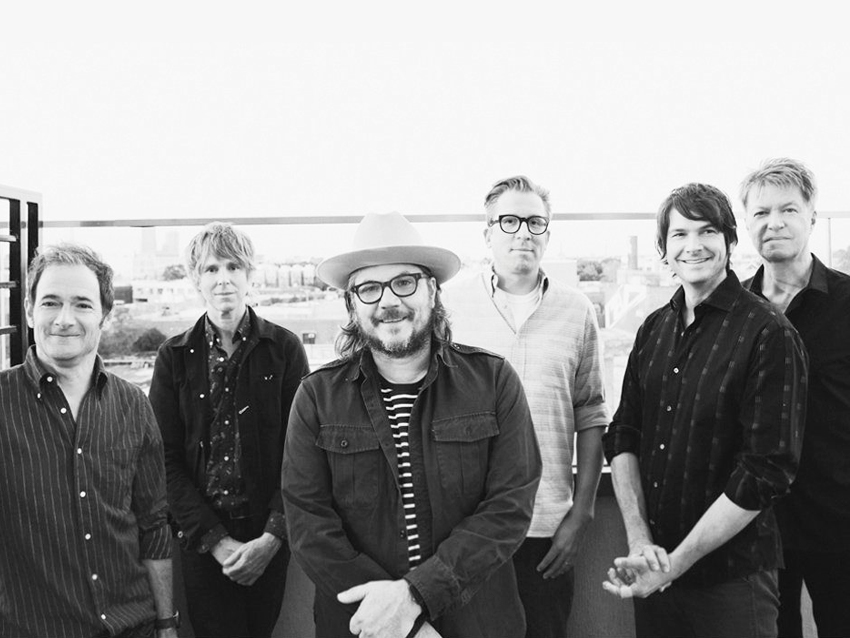
From Chicago to Padua, Wilco’s restless folk at the Gran Teatro Geox
24 July 2019
Venice Access Fee 2026: Rules, Costs, and Bookings
30 March 2026
taying at Casa al Carmine means being just a few steps away from what, in the 14th century, was one of the most prestigious courts in Europe. Among the city’s lesser-known but most fascinating treasures is the Carrarese Palace(Reggia dei Carraresi). This monumental complex was once the political heart of Padua. Today, the structure is the prestigious seat of the Galilean Academy of Sciences, Letters, and Arts. It houses the splendid private Chapel of the Carrarese Signoria, an artistic jewel officially listed as a UNESCO World Heritage site. A visit to this location allows you to immerse yourself in the grandeur of Carrarese-era Padua.
The Carrarese Palace: an island of power in the heart of the city
The ancient residence of the Lords of Padua was a true “city within a city.” Ubertino da Carrara began its construction in 1338, creating a fortified island. He succeeded in restoring order and peace, starting a period of prosperity for the people of Padua. In the past, the famous “Traghetto” started from the palace: a suspended viaduct on 28 large arches that connected the structure to the Torlonga, today’s Specola Observatory. This crenelated passage provided the Princes with a safe escape route, traversable even on horseback. Although the viaduct was destroyed in 1777, the Carrarese Loggiaremains today to witness the magnificence of that court. The famous poet Francesco Petrarch was also an illustrious guest in these halls in 1349.
The complex of buildings expanded gradually, adding a central peristyle body clearly visible in historical maps from the 18th century. In 1820, the Municipality decided to demolish this central part. Today, only the Sala dei Giganti (Hall of Giants) remains from that core, once a solemn hall for receptions. The history of the Palace is marked by drastic interventions: in 1877, Camillo Boito demolished a wing of Ubertino’s Loggia, while later a wall of the Chapel itself was torn down, unfortunately destroying part of the wonderful frescoes.
Guariento’s frescoes: a pictorial revolution
On the first floor of the palace lies the true heart of the visit: the Chapel frescoed between 1349 and 1354 by Guariento di Arpo. The artist completely revolutionized the pictorial narrative of his time. He eliminated the rigid separation between the various panels of the scenes. Each episode is not isolated but joins the others in a single fluid space. Guariento mixes the Giottesque tradition with Byzantine influences, placing extreme care in the rendering of architecture and blue backgrounds.
On the West Wall, the images flow seamlessly. In the upper register, we can admire Noah blessed by the Lord, Abraham’s dialogue with the three Angels, and the sacrifice of Isaac. The grace of the faces and the delicacy of the arched wings make these figures unforgettable. Moving to the right, one observes the life of Joseph, sold by his brothers into slavery. In the lower register, David and Goliath, the Judgment of Solomon, and the stories of the prophet Daniel stand out. On the East Wall, fragments saved from the demolitions remain: Joseph interpreting dreams and Adam and Eve before the Eternal.
The charm of 14th-century fashion in sacred scenes
What makes these frescoes unique is the process of secularizing religious scenes. A wonderful example is the figure of Judith, depicted while beheading Holofernes. The biblical heroine is portrayed as a noblewoman of the time ready for a gala party. She wears a sumptuous yellow dress with violet shades and a charming embroidered cap. Every detail is described with almost photographic precision. From Holofernes’ lavish tent to the small flowers in the gardens, everything bears witness to daily life in 14th-century Padua. The religious narrative transforms into a precious historical record of the furnishings and costumes of the era.
Useful Info for the Visit
-
Address: Via Accademia, 7 – Padova.
-
Opening Hours: Tuesday to Sunday, 10:00 AM – 12:30 PM.
-
Last Entry: 12:00 PM.
-
Cost: Free admission.
-
Official Website: accademiagalileiana.it
Contacts for Bookings
-
Phone: +39 049 8763820
-
E-mail: segreteria@accademiagalileiana.it
How to get there from Casa al Carmine
-
On Foot: A 15-minute walk through the pedestrian area of the historic center.
-
By Bicycle: In just 5 minutes. At Casa al Carmine, your bike is always safe.
-
By Taxi: If you are short on time, the ride takes about 5/6 minutes. Radio Taxi Padova: +39 049 651333.